



7 Ways to Organize Your Cockpit for Safer Flights
A cluttered cockpit isn't just inconvenient - it can create serious safety risks. Loose items may block controls, turn into hazards during turbulence, or distract you when focus is critical. Proper organization ensures everything you need is accessible and secure. Here are seven practical strategies to keep your cockpit tidy, safe, and efficient:
- Use a kneeboard: Tools like the Magic Kneeboard keep charts and devices secure and easy to view, even in turbulence.
- Assign fixed spots: Store items like checklists, pens, and tools in consistent locations to avoid fumbling during flight.
- Secure loose items: Use magnetic mounts or Velcro to keep devices stable and prevent them from becoming hazards.
- Keep emergency gear handy: Ensure critical items like backup charts and checklists are always within reach.
- Manage cables: Use clips or organizers to prevent tangles and interference with controls.
- Follow a pre-flight routine: Set up your cockpit before each flight to ensure everything is in its place.
- Choose adjustable tools: Opt for gear that fits your needs and cockpit layout, like kneeboards with elastic straps.
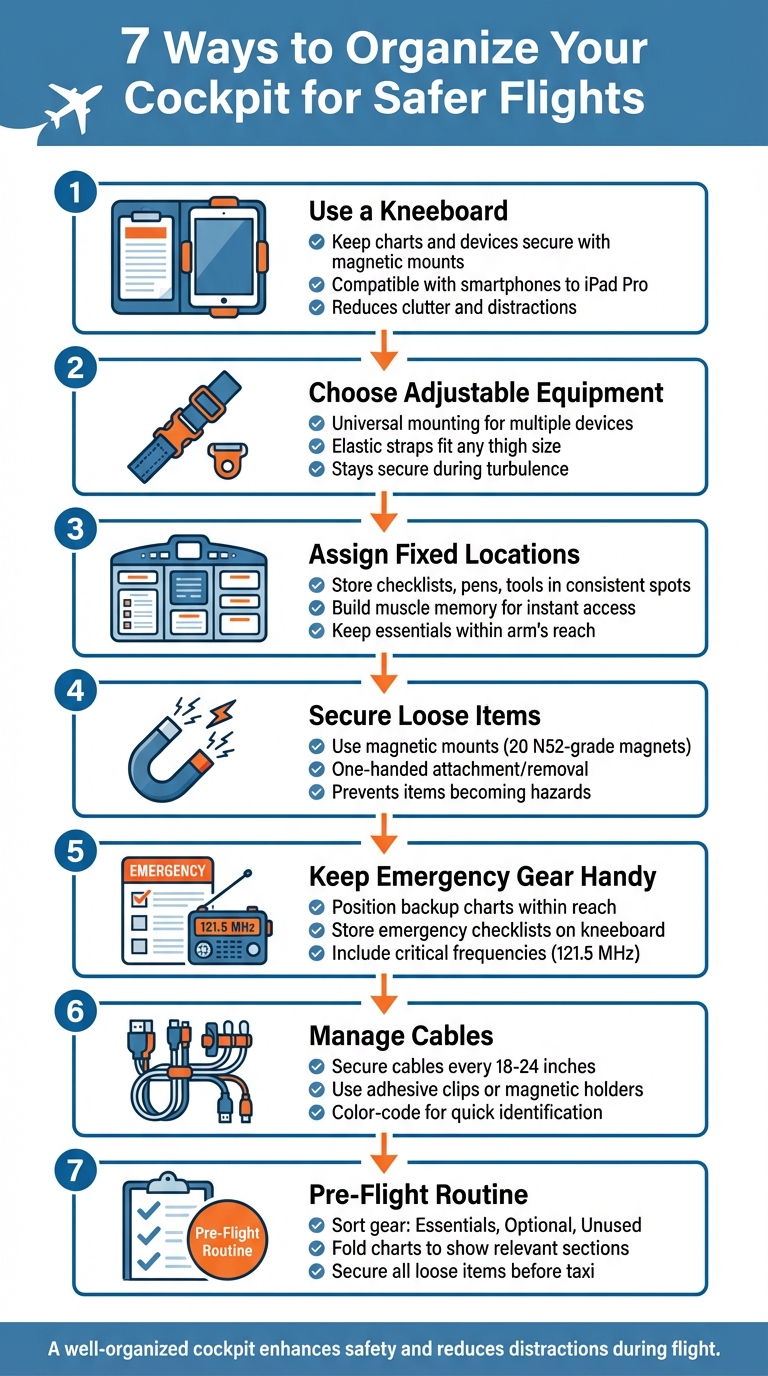
7 Essential Cockpit Organization Strategies for Pilot Safety
sbb-itb-5051167
1. Use a Magic Kneeboard for Charts and Devices
Keeping your cockpit organized starts with having the right tools, and the Magic Kneeboard is a game-changer. The Dream Pilot Magic Kneeboard offers quick access to navigation charts and essential devices. It uses strong magnets to secure your device to your leg, eliminating the need for bulky clamps. This setup lets you glance at charts or apps easily without taking your focus away from the instruments.
Improves Cockpit Accessibility
This kneeboard is compatible with a variety of devices, from small smartphones to larger tablets like the iPad Pro. It works seamlessly with iPhone 11+ models via MagSafe, and other devices can use the included metal plate. Switching between portrait and landscape orientations mid-flight is effortless. In September 2025, pilot Michal Orlita tested the Magic Kneeboard while flying a Bristell B23 Turbo in turbulent conditions and confirmed that the magnetic mount kept his phone securely in place.
Staying organized in the cockpit isn’t just about convenience - it’s crucial for maintaining focus and minimizing distractions.
Reduces Clutter and Distractions
The kneeboard’s slim design sits snugly against your leg, helping to keep the cockpit free of unnecessary obstructions. Unlike clamp-style holders that can wobble or interfere with controls during turbulence, the Magic Kneeboard stays stable. Its Velcro strap adds an extra layer of security for your device. As Michal Orlita shared:
"It's as simple as possible, and it doesn't get in the way of me in flight, whether I have my phone or tablet on it or not".
Enhances Safety During Flight
A tidy and secure cockpit setup does more than streamline operations - it helps ensure safety. The magnets are carefully placed to avoid disrupting compass or GPS signals. The kneeboard also passed USA military-grade durability tests on June 25, 2025. In an emergency, you can quickly detach your device to access a checklist or make a call, then reattach it just as easily. Before takeoff, be sure to perform a tug test to confirm the magnets and strap are secure. To avoid cable tangles, use short, right-angle charging cords secured with clips.
This thoughtful design not only simplifies your cockpit but also enhances your overall flying experience.
2. Choose an Adjustable Kneeboard for Custom Fit
Pilots come in all shapes and sizes, and so do their cockpit setups and device preferences. The Dream Pilot Adjustable Kneeboard is designed to meet these varying needs. With its universal mounting system, it supports both smartphones and mini tablets without requiring extra accessories. The elastic strap adjusts easily to fit any thigh size, offering a stable platform that won’t cut off circulation or cause discomfort.
Enhances Cockpit Accessibility
This kneeboard’s adaptable design makes it a practical choice for pilots who use multiple devices. It accommodates everything from compact smartphones to mini tablets, making it easy to switch between devices during flight. The soft, elastic strap keeps the board securely in place, even during turbulence, and allows you to position it at an angle that’s easy to glance at - minimizing time spent looking away from critical instruments.
Reduces Clutter and Distractions
A snug, well-fitted kneeboard can help streamline your cockpit environment. By sitting securely against your leg, it avoids interfering with key controls like the yoke or throttle. Features like integrated pen loops and side pockets ensure that small items stay organized and within reach . However, always double-check that the kneeboard doesn’t obstruct any control movements, especially in smaller aircraft where space is limited.
Boosts Safety During Flight
When turbulence strikes, a secure kneeboard can make a big difference. The adjustable elastic strap ensures that your device stays in place, even in rough air or during hard landings. Before takeoff, perform a quick fit check to confirm it’s secure. To prevent cable tangles, use short, right-angle charging cords for a cleaner setup.
3. Assign Fixed Locations for Checklists and Tools
Once you've secured your devices with a kneeboard, the next step in cockpit organization is assigning permanent spots for your checklists and tools.
Every pilot knows the frustration of digging for a pen or flashlight at a critical moment. The solution? Make sure every item has a dedicated place. When you consistently store checklists, pens, and flashlights in the same location, you can grab them instantly - no searching, no hesitation.
Improves Cockpit Accessibility
"If you can't reach it from the pilot's seat, it might as well not be on board the airplane." - Tom, Expert Pilot
This principle is key when organizing your cockpit. Essential items like emergency checklists, navigation logs, and pens should always be within arm's reach. Use your kneeboard to store these critical tools, and take advantage of features like pen loops and side pockets for smaller items like spare batteries or fuel testers. Over time, this setup builds muscle memory, allowing you to grab what you need by feel alone - keeping your focus outside the cockpit.
For larger items, such as your Pilot's Operating Handbook or backup charts, designate a specific seat pocket. You can also use acrylic organizers with suction cups to keep frequently used tools visible and accessible at eye level. This system not only keeps your cockpit tidy but also makes it more functional during flight.
Reduces Clutter and Distractions
Loose items in the cockpit are more than just an annoyance - they're a safety risk. For instance, charts or pens left on the instrument panel can slide during turbulence and interfere with the controls. To avoid this, adopt a system where every item is returned to its designated spot immediately after use. Many professional pilots follow this practice, consistently stowing manuals, charts, and tools in their assigned places.
Cargo pants can also be a smart choice for securing small tools, preventing them from falling under seats or causing distractions. Additionally, black metallic binder clips are an easy way to keep approach plates open and in place, ensuring they don’t slide or flap during critical moments.
A well-organized cockpit doesn’t just look clean - it reduces distractions and enhances safety.
Improves Safety During Flight
"Scrambling to find the appropriate emergency checklist as the fire bell is clattering in your ear... is not exactly a professional or safe situation." - Les Abend, Retired Airline Captain
Having fixed spots for your tools can significantly cut down on dangerous heads-down time. For example, clip your emergency checklist to your kneeboard or store it in a dedicated side pocket for quick access. This level of organization reduces mental strain, freeing you to focus on flying.
At night, when visibility is limited, being able to locate tools by touch becomes even more critical. Establishing your system during daylight ensures you're prepared when flying in the dark. A consistent, organized cockpit setup not only boosts efficiency but also enhances in-flight safety.
4. Secure Loose Items with Magnetic Mounts
Once you've assigned fixed spots for your checklists and tools, the next step is making sure they stay secure during flight. Magnetic mounts are a practical way to keep devices and accessories in place. They work seamlessly with your organization strategy, preventing items from turning into potential hazards.
Easy to Use and Install
Magnetic mounts are incredibly user-friendly. Unlike bulky, clamp-style holders that demand two hands and careful adjustments, magnetic systems allow for quick, one-handed attachment and removal. Bret Koebbe, Senior Vice President at Sporty's and Senior Flight Instructor, highlights this convenience:
"The MagSafe attachment is an improvement over traditional clamp-style mounts, allowing you to easily attach and remove your iPhone from the mount with one hand."
Setting them up is simple too. Most mounts attach using high-strength suction cups for windows or elastic Velcro straps for kneeboards. If your device isn’t MagSafe-compatible, you can stick a small adhesive metal plate on the back of your phone or tablet case to make it work.
Improves Cockpit Accessibility
Magnetic mounts ensure your devices are always within reach and positioned for easy viewing. With their magnetic surfaces, you can quickly switch between portrait and landscape orientations - perfect for toggling between navigation maps and landing checklists. Aviation-grade mounts use 20 N52-grade neodymium magnets, providing a firm grip even during turbulence or sharp maneuvers.
Reduces Clutter and Distractions
These mounts are designed to take up minimal space, avoiding any obstruction of the instrument panel or interference with controls. This keeps your cockpit tidy and ensures all essential tools are accessible. For added organization, route charging cables away from controls and secure them with clips.
5. Keep Emergency Gear and Backup Charts Within Reach
When it comes to emergencies, every second matters. That’s why having your emergency gear and backup charts within arm’s reach is non-negotiable. You simply can’t afford to waste precious time searching for critical items during a crisis.
Improves Safety During Flight
Your emergency checklists and backup paper charts should be positioned so you can grab them without unbuckling your seatbelt. Imagine dealing with equipment failure or a navigation issue - having these tools instantly accessible can make all the difference. For example, store backup charts and emergency navcom radios in a flight bag right behind the copilot seat. Meanwhile, keep essentials like emergency checklists, Mayday call formats, and critical frequencies (like 121.5 MHz) secured to your kneeboard. This setup ensures that vital resources are always at your fingertips, aligning with the broader goal of maintaining a well-organized cockpit.
Improves Cockpit Accessibility
Assigning specific, easy-to-reach spots for emergency gear ensures you can find what you need - even in high-pressure moments. Aviation writer and FAA Safety Team Representative William E. Dubois emphasizes this point:
"Knowing where things are in the aircraft allows you to get anything you need during the flight, at any time, without taking your eyes (or mind) off of the task at hand: flying the airplane."
This advice applies doubly to emergency items. For instance, keep your Pilot's Operating Handbook (POH) in the seat pocket behind the copilot, stash spare batteries for headsets and flashlights in a dedicated pocket of your flight bag, and secure a flashlight in a spot you can locate even in low visibility. It’s all about being prepared when it counts.
Reduces Clutter and Distractions
A tidy cockpit isn’t just about aesthetics - it’s about safety. Keeping emergency gear visible and accessible reduces clutter, which in turn prevents distractions and hazards during turbulence. Avoid stowing critical items in closed compartments where they’re harder to access, and never place objects on the instrument panel. Loose items can block your view, cause glare, or even fall onto controls during turbulence, creating unnecessary risks. By organizing your emergency setup thoughtfully, you not only save time but also enhance the overall safety of your flight.
6. Manage Cables and Small Gadgets with Clips
Once you've got your cockpit securely organized, the next step is tackling cables and small gadgets. Tangled cords and loose items like pens can be more than just annoying - they can interfere with controls or distract you, especially during turbulence. This is where cable clips and organizers become game-changers.
Reducing Clutter and Distractions
Cable organizers are a simple yet effective way to keep devices like tablets, phones, and GPS units in place. They provide dedicated slots for charging cables, ensuring cords stay untangled and easy to access, even in tight spaces.
For your writing tools, compact pen holders or binder clips attached to your clipboard can keep pens from rolling away. If you want to take it a step further, try color-coding your cables - red for charging, blue for data - so you can quickly grab the right one when you need it.
Boosting Safety During Flight
Loose cables can cause serious problems, like interfering with your control yoke or getting stuck under the rudder pedals during turbulence. Securing cables every 18 to 24 inches can prevent sagging and reduce vibration damage. Adhesive cable clips or magnetic holders are great options because they don't require permanent installation. For ANR headset control boxes, a Velcro-backed pouch works much better than wedging them between logbooks, where they could shift dangerously.
Enhancing Accessibility in the Cockpit
Suction-cup holders can attach to side windows, keeping essentials like phones, sunglasses, or pens within arm's reach. This setup prevents items from sliding to the floor or passenger seat during flight maneuvers - a phenomenon often called "gearcreep." Labeling cable ends with durable markers also makes reconfiguring your setup during flight much easier. By staying on top of cable management, you'll find it complements your overall cockpit organization perfectly.
7. Establish a Pre-Flight Organization Routine
Once you've got your cockpit tools and storage sorted, it's time to put a solid pre-flight routine into action. This routine ensures that everything stays in its designated spot, ready for use when you need it most.
Think of it as "building a nest" - a habit of placing every manual, chart, and tool in its proper place before each flight. This way, even in low light or during an emergency, you’ll know exactly where to find what you need. Take Warren Morningstar, AOPA Vice President of Communications, as an example. Back in November 2002, he shared how he tailored a checklist for his Beechcraft A36 Bonanza. His list included aftermarket gear like a fuel totalizer and radar, helping him avoid surprises and stick to critical procedures every time.
Reduces Clutter and Distractions
Start by sorting your gear into three categories:
- Essentials: Items like your headset, iPad, and checklist that you use every flight.
- Optional: Things like a handheld radio or flight computer that aren't always necessary.
- Unused: Anything you haven’t touched in over a year - ditch these immediately.
Before taxiing, do a quick sweep for loose items and clear out any clutter. A clean cockpit helps keep your focus where it needs to be.
Improves Cockpit Accessibility
Make your charts and approach plates easy to use. Fold sectional charts so only the relevant flight path is visible, and arrange approach plates in the order you’ll need them. This setup reduces the time spent looking down at your materials, keeping your eyes outside the cockpit as much as possible. As Dave Wilkerson wisely points out:
"Each moment that your eyes probe needlessly inside the cockpit is a moment lost to detecting dangers outside the aircraft".
Improves Safety During Flight
Safety starts with the basics, like ensuring your pilot seat is locked before engine start - an unsecured seat could lead to losing control during takeoff. Also, secure all loose items to prevent them from becoming hazards. Loose gear can turn into dangerous projectiles or even interfere with controls during turbulence. One vivid example: in 2006, a Super Cub pilot narrowly avoided disaster when a falling digital camera jammed the elevator control during a go-around.
With a little preparation, you can keep your cockpit organized, accessible, and safe, making every flight smoother and more secure.
Conclusion
A well-organized cockpit goes beyond just looking neat - it’s about prioritizing safety and maintaining focus. By applying these seven strategies, you create a system that lightens your workload, reduces distractions, and keeps essential tools within easy reach. Think of it as training your muscle memory for the flight deck, so you can locate equipment by feel while staying focused on flying.
Every habit you establish in your cockpit setup directly supports operational safety, contributing to the broader goal of reducing risks during flight. Even small changes can make a big difference, as highlighted by industry accident rates.
Start with a few simple tweaks: use a kneeboard for quick access to ATC instructions or reorganize your flight bag to ensure backup charts are always at hand. Your cockpit should work seamlessly with you, whether you’re navigating VFR patterns or managing complex IFR approaches. These organizational habits free up your attention for the most critical task - flying safely.
Each flight offers a chance to fine-tune your system. The more consistent your setup becomes, the more prepared and confident you’ll feel when faced with high workloads or unexpected challenges. This disciplined approach not only streamlines your workflow but also strengthens your commitment to safe and efficient flying.
FAQs
How do I know if a kneeboard will fit my cockpit and not block controls?
To make sure a kneeboard works well in your cockpit without getting in the way, pay attention to its size and design. It should be big enough to hold your important documents or devices but slim and light enough to avoid blocking controls. Adjustable straps or secure fittings are key to keeping it steady on your thigh. Take a moment to measure your cockpit space and compare it to the kneeboard's dimensions to ensure it fits just right.
Will magnetic mounts affect my compass, GPS, or other avionics?
Magnetic mounts in kneeboards are crafted with care to avoid interfering with cockpit instruments. They're strategically placed at a safe distance from sensitive electronics, ensuring your compass, GPS, and other avionics remain unaffected. This thoughtful design keeps both safety and functionality at the forefront for pilots.
What should I keep within arm’s reach for emergencies?
Keeping essential tools within arm's reach during flights can make all the difference in critical situations. Items like a flashlight, a pen or pencil, and emergency reference materials aren't just convenient - they're crucial for maintaining safety and efficiency when time is of the essence.